


What Is Annealed Glass
What Is Annealed Glass?
Annealed glass is a standard type of flat glass that has been slowly cooled in a controlled process to reduce internal stress. It is one of the most common forms of glass used in construction, furniture, interior design, mirrors, picture frames, and further glass processing.
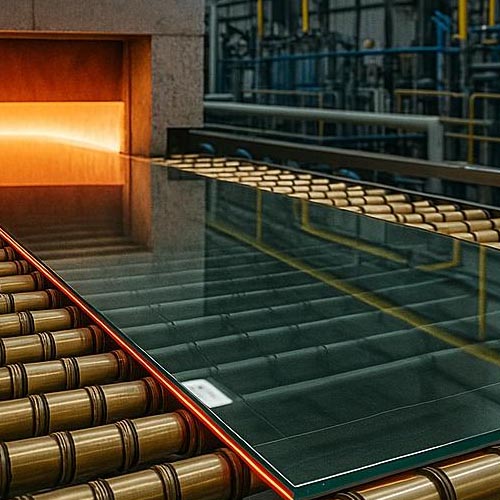
During the manufacturing process, molten glass is formed into a flat sheet and then gradually cooled in a temperature-controlled chamber known as an annealing lehr. This controlled cooling process helps relieve residual stresses inside the glass, creating a stable and workable material that can be cut, drilled, edged, polished, and processed into other types of architectural glass.
Annealed glass is often considered the basic starting material for many advanced glass products, including tempered glass, laminated glass, insulated glass units, decorative glass, and coated architectural glass.
How Is Annealed Glass Made?
The production of annealed glass generally begins with the float glass manufacturing process. Raw materials such as silica sand, soda ash, limestone, and other ingredients are melted at high temperatures. The molten glass is then formed into a continuous flat ribbon.
After the glass sheet is formed, it enters an annealing lehr, where the temperature is gradually reduced under carefully controlled conditions. Slow cooling is essential because rapid cooling can create internal stresses that make the glass more vulnerable to cracking or breakage.
The basic manufacturing process includes:
- Melting raw materials to create molten glass.
- Forming the glass sheet using the float glass process.
- Controlled cooling through an annealing lehr.
- Stress relief to improve stability and workability.
- Cutting and processing into required sizes and shapes.
The annealing process is a fundamental part of producing stable flat glass suitable for fabrication and architectural applications.
Key Properties of Annealed Glass
Annealed glass offers several practical characteristics that make it widely used across the construction and design industries.
Excellent Optical Clarity
Standard annealed float glass provides a smooth, flat surface with good transparency. It allows natural light to pass through efficiently and is suitable for windows, interior glazing, display areas, and decorative applications.
Easy to Cut and Fabricate
One of the major advantages of annealed glass is its workability. It can be cut, drilled, machined, edged, polished, and shaped before installation or further processing.
Cost-Effective
Compared with tempered, laminated, or other specialty glass products, annealed glass is generally a more economical option. This makes it suitable for projects where advanced safety performance is not required.
Suitable for Further Processing
Annealed glass is commonly used as a base material for manufacturing:
- Tempered glass
- Laminated glass
- Insulated glass units
- Decorative glass
- Mirrors
- Coated glass
- Printed glass
Common Applications of Annealed Glass
Annealed glass is used in many residential, commercial, and decorative applications where standard glazing performance is appropriate.
Typical applications include:
- Standard windows
- Picture frames
- Mirrors
- Display cabinets
- Furniture components
- Decorative interior panels
- Low-risk interior partitions
- Cabinet doors
- Glass processing and fabrication
Because it is easy to fabricate, annealed glass is also widely used by glass processors as the starting material for customized architectural glass products.
Annealed Glass vs Tempered Glass
The major difference between annealed glass and tempered glass is the heat treatment process.
| Feature | Annealed Glass | Tempered Glass |
|---|---|---|
| Manufacturing | Slowly cooled | Heated and rapidly cooled |
| Strength | Standard strength | Higher strength |
| Fabrication | Can be cut and drilled | Cannot normally be cut after tempering |
| Breakage Pattern | Large, sharp fragments | Small fragments |
| Safety Glass | Generally no | Generally yes when properly certified |
| Cost | Lower | Higher |
Annealed glass breaks into relatively large pieces with sharp edges, which means it is generally not considered safety glass. Tempered glass, by comparison, is designed to break into smaller fragments that reduce the risk of serious injury.
Annealed Glass vs Laminated Glass
Laminated glass consists of two or more glass layers bonded together with an interlayer. While annealed glass can be used as one of the components in laminated glass, the finished laminated product provides different safety characteristics.
When laminated glass breaks, the interlayer helps retain the broken glass fragments. Annealed glass alone does not have this feature and may fall apart into sharp pieces when broken.
For applications requiring improved safety, security, sound control, or glass retention, laminated glass may be a better choice.
Advantages of Annealed Glass
Annealed glass remains popular because of several important benefits:
- Excellent clarity and flatness
- Easy cutting and fabrication
- Suitable for drilling and polishing
- Cost-effective material
- Available in various thicknesses
- Ideal as a base glass for further processing
- Suitable for decorative applications
- Compatible with coatings and treatments
These advantages make annealed glass an important material in the global architectural and glass-processing industries.
Limitations of Annealed Glass
Despite its versatility, annealed glass has limitations. It has lower impact resistance than tempered or heat-strengthened glass and can break into large, sharp fragments. Therefore, it may not be suitable for locations where human impact or safety risks are high.
Safety glazing requirements vary by building code and application. Doors, shower enclosures, railings, low-level glazing, and other impact-prone areas often require specially rated safety glass rather than ordinary annealed glass.
Choosing the Right Glass for Your Project
Annealed glass is an excellent choice when a project requires clear, economical, and easily fabricated glass. It is particularly useful for standard glazing, decorative applications, mirrors, furniture, and as a base material for further processing.
However, architects, contractors, and designers should carefully evaluate safety requirements before selecting glass for doors, bathrooms, partitions, facades, railings, or other high-risk locations.
Understanding the differences between annealed glass, tempered glass, and laminated glass helps ensure that the selected product meets both design and performance requirements.
Conclusion
Annealed glass is one of the most important basic materials in the architectural glass industry. Produced through a controlled cooling process, it offers excellent clarity, stability, affordability, and fabrication flexibility.
Although it does not provide the same strength or safety performance as tempered or laminated glass, annealed glass remains an essential foundation for countless architectural, decorative, and manufacturing applications. From standard windows and mirrors to advanced glass processing, annealed glass continues to play a critical role in modern construction and interior design.
For glass suppliers, architects, contractors, and project developers, understanding the properties and limitations of annealed glass is essential when selecting the right glazing material for each application.
Latest News
Contact Us

Name: Steven Li
Tel: +86-592-5851379
Mobile: +86-18750258798
E-mail: glass@morestone.net
Skype: +86-18750258798
WeChat: 0086-18750258798
Whatsapp: 0086-18750258798
Add: Xinyang Industry Zone Haicang District Xiamen Fujian Province China


 Skype Chat
 WhatsApp
 Mail inquiry