


What Is Tempered Glass
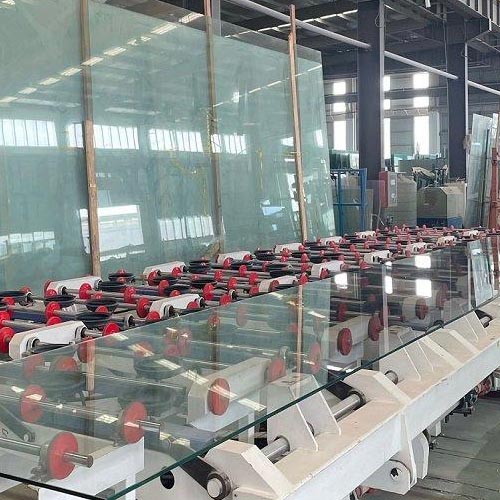
What Is Tempered Glass?
Tempered glass, also known as toughened glass, is a type of safety glass that is processed through controlled heating and rapid cooling to increase its strength and improve its breakage characteristics. Compared with ordinary annealed glass, tempered glass is significantly stronger and is designed to break into relatively small fragments rather than large, sharp pieces.
Because of its strength, durability, and safety performance, tempered glass is widely used in residential, commercial, hospitality, and architectural projects. Common applications include glass doors, shower enclosures, windows, partitions, railings, furniture, storefronts, and building facades.
Tempered glass has become an important material in modern architecture because it combines transparency with improved safety and structural performance.
How Is Tempered Glass Made?
Tempered glass begins as standard annealed glass. The glass is first cut, drilled, edged, and processed into its final shape before tempering.
The basic tempering process includes:
- Glass Cutting and Fabrication
The annealed glass is cut to the required dimensions. Holes, notches, and edge treatments are completed before tempering. - Heating
The glass is heated in a tempering furnace to approximately 600–700°C, depending on the glass type and thickness. - Rapid Cooling
High-pressure air is used to cool the glass quickly. - Creation of Internal Stress
Rapid cooling creates compressive stress on the outer surfaces and tensile stress within the glass.
This stress distribution gives tempered glass its improved mechanical strength and characteristic breakage pattern.
Once the glass has been tempered, it generally cannot be cut, drilled, or significantly modified. Any additional fabrication must normally be completed before the tempering process.
Key Properties of Tempered Glass
Increased Strength
Tempered glass is considerably stronger than ordinary annealed glass of similar thickness. Its increased resistance to impact and thermal stress makes it suitable for demanding architectural applications.
Safety Breakage Pattern
One of the most important characteristics of tempered safety glass is the way it breaks. When broken, it typically fractures into many relatively small pieces rather than large, sharp shards.
This breakage behavior helps reduce the risk of serious injury compared with standard annealed glass.
Heat Resistance
Tempered glass has improved resistance to temperature changes. This makes it useful in areas exposed to heat, sunlight, and varying environmental conditions.
Durability
Tempered glass can withstand greater mechanical stress than ordinary glass, making it suitable for high-traffic commercial spaces, hotels, restaurants, offices, and residential buildings.
Optical Clarity
Despite its improved strength, tempered glass maintains the transparency and clean appearance associated with architectural glass.
Common Applications of Tempered Glass
Tempered glass is used in a wide range of architectural and interior applications.
Glass Doors
Commercial entrance doors, interior glass doors, and patio doors frequently use tempered safety glass because of its improved impact resistance.
Shower Doors and Bathroom Partitions
Frameless shower enclosures and bathroom glass partitions are among the most common applications for tempered glass. The material provides a modern, transparent appearance while offering enhanced safety performance.
Windows and Building Facades
Tempered glass is often used in commercial windows, curtain walls, storefronts, and architectural facades where increased strength and thermal resistance are required.
Glass Railings
Balconies, staircases, terraces, and other railing systems may use tempered or laminated tempered glass depending on local building codes and structural requirements.
Furniture
Glass tabletops, shelves, cabinet doors, and display furniture often use tempered glass to improve durability and safety.
Automotive Applications
Tempered glass is also used in certain automotive windows because of its strength and controlled breakage characteristics.
Tempered Glass vs Annealed Glass
The primary difference between tempered and annealed glass is the manufacturing process.
| Feature | Tempered Glass | Annealed Glass |
|---|---|---|
| Strength | Higher | Standard |
| Manufacturing | Heated and rapidly cooled | Slowly cooled |
| Safety Performance | Improved | Lower |
| Breakage | Small fragments | Large sharp pieces |
| Heat Resistance | Higher | Lower |
| Post-Processing | Cannot normally be cut or drilled | Can be cut and drilled |
| Cost | Higher | Lower |
Annealed glass is easier to fabricate after production, while tempered glass provides greater strength and improved safety characteristics.
Tempered Glass vs Laminated Glass
Tempered glass and laminated glass are both commonly used as safety glazing, but they perform differently.
Tempered glass is strengthened through heat treatment. Laminated glass consists of two or more glass layers bonded together with an interlayer.
When tempered glass breaks, it typically separates into small fragments. When laminated glass breaks, the interlayer helps hold the broken glass pieces together.
For applications such as skylights, security glazing, sound-control systems, and certain railings, laminated glass may provide additional benefits. In many advanced architectural applications, tempered glass is combined with laminated construction to create laminated tempered glass.
Advantages of Tempered Glass
The main benefits of tempered glass include:
- Higher strength than standard annealed glass
- Improved impact resistance
- Better resistance to thermal stress
- Safer breakage characteristics
- Excellent transparency
- Suitable for residential and commercial projects
- Available in different thicknesses
- Compatible with architectural hardware systems
- Ideal for doors, partitions, shower screens, and furniture
These advantages make tempered glass a popular choice for modern construction and interior design.
Limitations of Tempered Glass
Although tempered glass offers excellent strength and safety performance, it also has some limitations.
Once tempered, the glass generally cannot be cut, drilled, or reshaped. All holes, cutouts, edge polishing, and fabrication work must be completed before the tempering process.
Tempered glass may also be more expensive than ordinary annealed glass because of the additional manufacturing process.
For applications requiring glass retention after breakage, laminated glass may be a more suitable option.
Choosing Tempered Glass for Architectural Projects
When selecting tempered glass, architects, contractors, designers, and project developers should consider several factors:
- Glass thickness
- Panel dimensions
- Hardware requirements
- Edge finishing
- Hole and cutout locations
- Building safety requirements
- Wind load requirements
- Thermal exposure
- Local building codes
The correct glass specification depends on the intended application. A shower enclosure, commercial storefront, glass partition, or railing system may require different glass thicknesses and performance characteristics.
Conclusion
Tempered glass is an essential safety material used throughout modern architecture and interior design. Through a controlled heating and rapid cooling process, standard glass is transformed into a stronger and more durable product with improved breakage characteristics.
From shower doors and glass partitions to commercial facades and furniture, tempered glass provides an effective combination of strength, safety, and visual transparency.
For architects, builders, hotel developers, interior designers, and glass contractors, selecting the right type of tempered glass can improve both the performance and appearance of a project. By understanding its manufacturing process, properties, advantages, and limitations, professionals can make better decisions when specifying architectural safety glass.
Latest News
Contact Us

Name: Steven Li
Tel: +86-592-5851379
Mobile: +86-18750258798
E-mail: glass@morestone.net
Skype: +86-18750258798
WeChat: 0086-18750258798
Whatsapp: 0086-18750258798
Add: Xinyang Industry Zone Haicang District Xiamen Fujian Province China


 Skype Chat
 WhatsApp
 Mail inquiry