


What Is Heat Soaked Glass
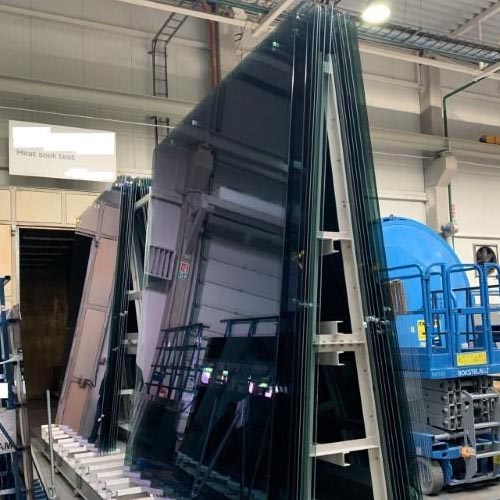
What Is Heat Soaked Glass?
Heat soaked glass is tempered glass that has undergone an additional testing process called heat soak testing. The purpose of this process is to reduce the risk of spontaneous breakage caused by certain microscopic inclusions within the glass, particularly nickel sulfide inclusions.
During heat soak testing, tempered glass panels are placed inside a specialized oven and exposed to elevated temperatures for a controlled period. Glass panels containing critical defects that may later cause spontaneous breakage are more likely to fail during the test.
The glass panels that remain intact after testing are known as heat soak tested glass or heat soaked tempered glass.
Heat soaked glass is widely used in demanding architectural applications, especially where replacing broken glass would be difficult, expensive, or potentially dangerous.
Why Is Heat Soak Testing Necessary?
Although tempered glass is significantly stronger than ordinary annealed glass, spontaneous breakage can occasionally occur. One possible cause is the presence of microscopic nickel sulfide inclusions inside the glass.
Nickel sulfide inclusions can change their structure over time. Because tempered glass contains internal stresses, changes in the size of these microscopic inclusions may create localized stress that can eventually cause unexpected breakage.
Heat soak testing is designed to accelerate this process under controlled conditions. By exposing tempered glass to high temperatures, panels with critical nickel sulfide inclusions are more likely to break during testing rather than after installation.
It is important to understand that heat soak testing reduces the risk of spontaneous breakage but cannot completely eliminate it.
How Is Heat Soaked Glass Made?
Heat soaked glass begins as standard annealed glass and goes through several manufacturing stages.
1. Glass Fabrication
The original glass is cut to the required size and shape. Holes, notches, cutouts, and edge finishing are completed before tempering.
2. Tempering Process
The glass is heated to a high temperature and then rapidly cooled with air.
This process creates compressive stress on the surface of the glass and increases its mechanical strength.
3. Heat Soak Testing
After tempering, the glass panels are placed inside a heat soak testing oven.
The glass is heated to an elevated temperature and maintained under controlled conditions. During this stage, some panels containing critical nickel sulfide inclusions may break.
Any glass that breaks during the test is removed.
4. Final Inspection
The glass panels that successfully complete the heat soak testing process are inspected and prepared for shipment or further processing.
The result is heat soak tested tempered glass suitable for demanding architectural applications.
What Is the Heat Soak Test?
The heat soak test is a quality-control process performed on tempered glass. The test is commonly associated with standards such as EN 14179 for heat-soaked thermally toughened safety glass.
During the test, glass panels are placed in a specially designed chamber and exposed to elevated temperatures.
The purpose is to encourage spontaneous failure of glass panels containing certain critical defects before they are installed in a building.
The process generally involves:
- Loading tempered glass into the heat soak oven
- Raising the temperature in a controlled manner
- Maintaining the glass at the required test temperature
- Holding the temperature for a specified period
- Monitoring glass breakage
- Removing failed panels
- Inspecting the remaining glass
Heat soak testing is especially important for projects where glass replacement after installation would require significant labor, scaffolding, cranes, or disruption to building operations.
Key Benefits of Heat Soaked Glass
Reduced Risk of Spontaneous Breakage
The primary advantage of heat soaked glass is that it helps identify some tempered glass panels that may be susceptible to spontaneous breakage.
Improved Quality Control
Heat soak testing provides an additional level of quality control beyond the standard tempering process.
Suitable for High-Risk Locations
Heat soaked glass is often specified for locations where falling glass could create safety concerns or where replacement would be difficult.
Ideal for Large Architectural Projects
Commercial buildings, hotels, airports, shopping centers, and high-rise developments may benefit from heat soak tested tempered glass.
Greater Confidence for Building Owners
Building owners, architects, contractors, and developers may prefer heat soaked glass for critical applications because of the additional testing process.
Common Applications of Heat Soaked Glass
Heat soaked glass is commonly used in demanding architectural projects.
Curtain Walls
High-rise curtain wall systems often use heat soak tested tempered glass because replacing a broken exterior panel can be expensive and complicated.
Building Facades
Exterior glass facades exposed to weather and temperature changes may use heat soaked glass to improve quality assurance.
Glass Spandrel Panels
Spandrel glass can experience high thermal stress due to solar absorption. Heat soak tested tempered glass may be specified for these applications.
Skylights and Overhead Glazing
Heat soaked glass may be used as part of specially engineered glazing systems for skylights and overhead architectural applications.
Balustrades and Railings
Certain structural glass railing systems may specify heat soaked tempered glass, often combined with laminated construction depending on safety and building code requirements.
Commercial Buildings
Office towers, hotels, shopping malls, airports, and public buildings are common applications for heat soak tested glass.
Heat Soaked Glass vs Tempered Glass
| Feature | Heat Soaked Glass | Standard Tempered Glass |
|---|---|---|
| Base Product | Tempered glass | Tempered glass |
| Additional Testing | Heat soak test | No heat soak test |
| Quality Control | Higher | Standard |
| Nickel Sulfide Risk | Reduced | Higher relative risk |
| Spontaneous Breakage Risk | Reduced but not eliminated | Standard risk |
| Cost | Higher | Lower |
| Typical Applications | Facades and critical architectural projects | General safety glazing |
Heat soaked glass is essentially tempered glass with an additional testing process.
Heat Soaked Glass vs Heat Strengthened Glass
Although the names sound similar, heat soaked glass and heat strengthened glass are very different products.
Heat strengthened glass is produced using a controlled heating and cooling process that increases its strength.
Heat soaked glass is already tempered glass that undergoes an additional heat soak testing process.
| Feature | Heat Soaked Glass | Heat Strengthened Glass |
|---|---|---|
| Base Process | Tempered and tested | Heat treated |
| Main Purpose | Reduce spontaneous breakage risk | Improve strength |
| Tempering Level | Fully tempered | Moderate |
| Heat Soak Test | Yes | Usually no |
| Typical Application | High-risk architectural glazing | Curtain walls and glazing systems |
Advantages for Architectural Projects
Heat soak tested glass is particularly valuable for large and complex buildings.
Architects and project developers may choose this product because:
- Exterior glass replacement can be expensive
- High-rise buildings have difficult access
- Falling glass may create safety risks
- Building downtime can affect commercial operations
- Large facade systems require consistent quality control
- Premium projects may require additional testing procedures
For hospitality projects, heat soaked glass can be considered for hotel facades, large lobby glazing, glass curtain walls, skylights, and other major architectural installations.
Limitations of Heat Soaked Glass
Heat soak testing provides important benefits, but it also has limitations.
The process does not guarantee that spontaneous breakage will never occur. Instead, it reduces the probability by encouraging some susceptible panels to fail before installation.
Heat soaked glass also requires additional production time, testing equipment, energy, and quality-control procedures. As a result, it generally costs more than standard tempered glass.
Projects should also consider that appropriate glass selection depends on structural requirements, safety regulations, panel size, glass thickness, installation method, and local building codes.
How to Specify Heat Soaked Glass
When specifying heat soaked glass for an architectural project, important details may include:
- Glass type
- Glass thickness
- Panel dimensions
- Tempering requirements
- Heat soak testing requirements
- Applicable standards
- Edge treatment
- Holes and cutouts
- Laminated glass construction
- Insulated glass configuration
- Coatings and finishes
- Structural load requirements
Clear specifications help ensure that the glass manufacturer understands the required processing and testing procedures.
Conclusion
Heat soaked glass is an advanced architectural glazing product created by subjecting tempered glass to an additional heat soak testing process. The primary purpose of this procedure is to reduce the risk of spontaneous breakage associated with microscopic inclusions, including nickel sulfide.
By identifying some potentially vulnerable tempered glass panels before installation, heat soak testing provides an additional level of quality assurance for demanding projects.
From high-rise curtain walls and commercial facades to hotels, airports, skylights, and public buildings, heat soaked glass is an important solution for architects, contractors, developers, and building owners.
When safety, quality control, and long-term performance are priorities, heat soak tested tempered glass can provide greater confidence for complex architectural glazing projects.
Latest News
Contact Us

Name: Steven Li
Tel: +86-592-5851379
Mobile: +86-18750258798
E-mail: glass@morestone.net
Skype: +86-18750258798
WeChat: 0086-18750258798
Whatsapp: 0086-18750258798
Add: Xinyang Industry Zone Haicang District Xiamen Fujian Province China


 Skype Chat
 WhatsApp
 Mail inquiry